Last week in conversation class, I gave my students the task of working with a partner to choose eight people to invite to a banquet that they (the students) would host. These eight people could include anyone dead or alive, excluding members of their families. They had to tell me why they selected these particular eight people, what kind of food they would serve to their guests and what the location of the meal would be.
Most of the students seemed to enjoy imagining this kind of opportunity and put some real thought into who they would invite. I imagine it has something to do with hospitality being an almost-universal value, regardless of culture or background. So, my dear international students--representing Korea, Angola, Saudi Arabia, Libya, Taiwan, China and Turkey--chose the following people with just a tiny bit of overlap:
The NBA Dream Team (a.k.a Michael Jordan, Derek Bird, etc.)
Michael Jackson
President Barack Obama (USA)
Oprah
President Nicolas Sarkozy (France)
Beyoncé
Li'l Wayne
Neil Armstrong
Jesus Christ
Muammar Qadhafi
President Lee Myung-bak (Korea)
Famous physicists (I can't remember their names right now)
best friends
President Abdallah ibn Khalifah Al Thani (Qatar)
Prime Minister Recep Tayyip Erdoğan (Turkey)
Martin Luther King, Jr. (who was originally listed as Malcolm X until I intervened)
me
I found the lists of invitees interesting, to say the least. I was surprised that the Prophet Mohammed didn't make the list (most likely there is a cultural reason to explain why he didn't and I'm just not aware of that reason). I was surprised that Oprah did make the list (in two cases: Angola/Saudi). The reasons they gave were fascinating, but they can generally be categorized into wanting to ask 'Why' a person did something or 'How' they did something or just to be in the presence of 'greatness.'
Then I got to thinking: how would I answer this question? I give my students these assignments and then shy away from doing the work myself. So, to exercise some part of my brain (whatever part it may be), I've written up a (shorter) list of invitees and why I would invite them. Disclaimer: This list could change depending on the day. :)
1. Victor Hugo: His writing has transformed not just a few people but thousands over the years. The brilliance of his style, vocabulary, ability to communicate the deepest truths of reality through storytelling are unmatched. I dream of reading Les Miserables in the original French one day.
2. Queen Elizabeth I: A woman of power, skill, bravery, intelligence and pride who lived during a time when women weren't supposed to be any of those things: I think yes.
3. Enkhsaikhen: I've actually met this man before and he changed my life forever. I have so many more questions for him now. What happened that this staunch, intellectual atheist began to desperately follow the Way of Christ? What kind of opposition did he face? How good was his translation of the Bible? If he could go back to Mongolia now, what would he do there?
4. Deborah: Mostly, I want her to tell me what it's like being a recognized and valuable prophetess. What does it look like for a woman to pursue a calling, even when that calling is 'different'? What did it take for her to be able to sing through her days?
5. C.S. Lewis: The brilliance and approachability of this man's writing is admired by people inside and outside the Church and I firmly believe that this kind of mutual respect should happen more often. I want to ask him about his writing process, about The Inklings, about Oxford and about his wife.
6. Henri Nouwen: I want to see the sacrifice and love for humans written on his face. I want to hear the voice that spoke communion to hundreds of special needs people. I want to experience his words in real life.
Who would you invite?
Tuesday, March 29, 2011

Saturday, March 26, 2011
Little House on the Prairie
When I was growing up, I got to visit my grandparents every other year or so (they lived two full days' drive away). We would stay for two weeks or so before making the long trek home. Going to their house was--and still is--like going home. In some ways, it even still feels more like home than where my parents live because they have not moved in 45 years. I can picture every corner and crevice of their home vividly and I can still taste the hot tea and Dutch biscuits that we ate daily at tea time.
In my younger years, one of our afternoon traditions was taking our tea while watching 'Little House on the Prairie.' These Michael Landon classics came on like clockwork at 4pm and we (my grandmother, mother and I) would sit in the den with our tea cups, saucers and biscuits precariously balanced on knees, pillows and end tables as we watched the unfolding drama of the Ingalls with rapt attention. I, of course, had read all of Laura Ingalls Wilder's books multiple times and was well-acquainted with the personalities of all the characters. Laura was always my favorite and I used to get lost in dreaming of my life as her.
[Aside: Often I wonder if the amount of reading I did as a child influenced me more than normal. When I think about it, I am really, scarily like the character of Laura Ingalls....]
Today, I need to rest. So, after accomplishing a few necessary tasks, I put the tea kettle on to boil this afternoon and turned the t.v. on. Sure enough, a Little House marathon is on the Hallmark channel right now and I am immediately at Granny's house, watching the laughter light up her eyes into that familiar crinkle, listening to tea cups clink delicately as we imagine what it means to be the pioneers of yesterday even as we pioneer life today, in different ways.
In my younger years, one of our afternoon traditions was taking our tea while watching 'Little House on the Prairie.' These Michael Landon classics came on like clockwork at 4pm and we (my grandmother, mother and I) would sit in the den with our tea cups, saucers and biscuits precariously balanced on knees, pillows and end tables as we watched the unfolding drama of the Ingalls with rapt attention. I, of course, had read all of Laura Ingalls Wilder's books multiple times and was well-acquainted with the personalities of all the characters. Laura was always my favorite and I used to get lost in dreaming of my life as her.
[Aside: Often I wonder if the amount of reading I did as a child influenced me more than normal. When I think about it, I am really, scarily like the character of Laura Ingalls....]
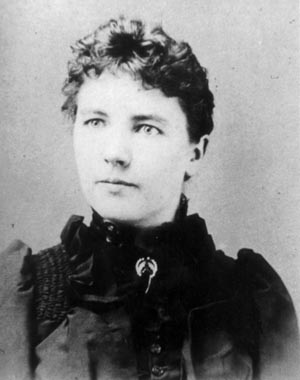
The real Laura Elizabeth Ingalls Wilder
Today, I need to rest. So, after accomplishing a few necessary tasks, I put the tea kettle on to boil this afternoon and turned the t.v. on. Sure enough, a Little House marathon is on the Hallmark channel right now and I am immediately at Granny's house, watching the laughter light up her eyes into that familiar crinkle, listening to tea cups clink delicately as we imagine what it means to be the pioneers of yesterday even as we pioneer life today, in different ways.
Saturday, March 19, 2011
The Road Not Taken
I have always loved Frost's poem.
Yesterday, I went on a walk through a delightful German wood. I stumbled across this intersection of paths and immediately was drawn into the symbolism of those paths, that poem and my life. I have always wanted to take the road less traveled by and words cannot describe how thankful I am to have stumbled across other people taking it, too.

Two roads diverged in a yellow wood,
And sorry I could not travel both
And be one traveler, long I stood
And looked down one as far as I could
To where it bent in the undergrowth;
Then took the other, as just as fair,
And having perhaps the better claim,
Because it was grassy and wanted wear;
Though as for that the passing there
Had worn them really about the same,
And both that morning equally lay
In leaves no step had trodden black.
Oh, I kept the first for another day!
Yet knowing how way leads on to way,
I doubted if I should ever come back.
I shall be telling this with a sigh
Somewhere ages and ages hence:
Two roads diverged in a wood, and I—
I took the one less traveled by,
And that has made all the difference.
Yesterday, I went on a walk through a delightful German wood. I stumbled across this intersection of paths and immediately was drawn into the symbolism of those paths, that poem and my life. I have always wanted to take the road less traveled by and words cannot describe how thankful I am to have stumbled across other people taking it, too.

Two roads diverged in a yellow wood,
And sorry I could not travel both
And be one traveler, long I stood
And looked down one as far as I could
To where it bent in the undergrowth;
Then took the other, as just as fair,
And having perhaps the better claim,
Because it was grassy and wanted wear;
Though as for that the passing there
Had worn them really about the same,
And both that morning equally lay
In leaves no step had trodden black.
Oh, I kept the first for another day!
Yet knowing how way leads on to way,
I doubted if I should ever come back.
I shall be telling this with a sigh
Somewhere ages and ages hence:
Two roads diverged in a wood, and I—
I took the one less traveled by,
And that has made all the difference.
Tuesday, March 15, 2011
Tom Wright: Women in Church Leadership
If you don't care about church stuff, this video is not for you. It is, however, for anyone who gives any sort of thought to how the Church reflects the gospel.
Thanks to Scot McKnight for posting this.
Thanks to Scot McKnight for posting this.
the promise of tomorrow.
my whole being is literally aching for tomorrow to happen.
whenever i cross an ocean, something Big starts to happen. i have been pulled in ten thousand directions over the past month so i haven't been able to revel in the fact that--
tomorrow, i am crossing an ocean. and there will be no going back to the way things are now or to the way they used to be.
tomorrow.
whenever i cross an ocean, something Big starts to happen. i have been pulled in ten thousand directions over the past month so i haven't been able to revel in the fact that--
tomorrow, i am crossing an ocean. and there will be no going back to the way things are now or to the way they used to be.
tomorrow.
Wednesday, March 9, 2011
Lent, and Compassion
Today is Ash Wednesday, the first day of the Lenten season. If people know anything about Lent, they probably know that Ash Wednesday marks the start of "give something up" for forty days before the celebration of Resurrection: coffee, alcohol (wine, beer or both), chocolate, bacon, facebook, and t.v. are some examples I've heard in the past.
But Lent is not just "giving something up." It is a time of finding ways to intentionally turn our hearts toward Salvation, of celebrating Him who became nothing so that we could have Him.
One of the most remarkable things about Salvation is that He was (is) always compassionate. When He was tired, when He was trying to be alone, when He was with sinners, when He was fasting, when He was with saints-- He was the heart beating: I love you. I will give everything for you.
I was reminded of this Salvation-Compassion today by reading part of a manuscript from Brennan Manning's 1996 talk at Seattle Pacific University. I've copied and pasted the part I read below; even though it is lengthy (and I don't like lengthy blogs!), I hope that you will read it and learn as I did what it means to celebrate the One who gave everything up.
If you claim the name Christian, you must answer I exist for the sake of Christ. He is the center of reality, the reason for its existence. If any of you are in Christ, you are a new creation.
In Matthew 5:48, Jesus says be perfect as your heavenly father is perfect.
In Luke 6:36 Jesus says be compassionate as your heavenly father is compassionate.
Biblical scholars tell us that the two words, perfect and compassionate, can be reduced to the same reality. Their conclusion? To follow Jesus in his ministry of compassion precisely defines the biblical meaning of being perfect as the heavenly father is perfect. For Jesus, compassion is the central quality of God and It means to feel as God feels, act as God...means the same as the other gospel, more abstract command, ‘to love.’
...There is one man whose impact on my life towers above everybody else. A man, who by the way he lived, taught me to read the scriptures in an entirely different light. He was the most Christlike man I’ve ever known. His name, Domique Wyome. He was the leader of our community, in France, the little brothers of Jesus, who live a life of manual labour by day with the poor, the nights wrapped and in silence, solitude and prayer...Dominique Wyome was the leader of our group. It was New Year’s morning. There were seven of us seated around the table. The conversation got animated when the subject turned to our daily employment. The German brother in our group remarked that our wages were substandard...I commented that our employers were never seen in the parish church on Sunday mornings. The French brother said that his boss was rude and greedy. The Spanish brother added in that they are all a bunch of hypocrites. Well, our tone got more caustic our salvos got heavier. We concluded that our avaricious bosses were nasty, self-centered Cretans who lay in bed all day on Sunday drinking wine and never once lifting their hearts or minds in thanksgiving to God.
Dominque sat at the end of the table and throughout our entire harangue he never once opened his mouth. I looked down at him and saw the tears rolling down his cheeks and I asked him, "What's the matter Dominique?" All he said was "mea cumpapa, mea compaap." "They don’t understand. They don’t understand."
How many times over the years that single sentence of Dominique’s has turned resentment of mine into compassion, how many times have I read the passion narratives in the four gospels and seen Jesus in the throes of his death agony, beaten, scourged, spit upon, and He is crying out to his father on behalf of his killers – “Father forgive them, mea culmpapa.”
It was the following year Dominique Wyome learned that he had inoperable cancer and with the permission of the community he moved from this little village up to Paris where he had some family.
He took a job as a night watchman in a factory. And every morning when he got off work at 7:00, instead of going to his little rented apartment, he went to a park directly across the street from the apartment. And hanging around in the park were all these marginal people; winos, drifters, has-beens, moral failures, dirty old men who would ogle girls as they passed by. Every morning, Dominique sat with them. He brought candy; shared it out among them.
And never once did he scold them, never once did he criticize them, never once did he reprimand them. He just gave off a peace, a serene sense of self possession that caused cynical young men, and defeated old men to gravitate toward him like bacon toward eggs. His simple witness to Christ lay in accepting others as they were, where they were without questions and allowing them to make
themselves at home in his heart.
Dominque Wyome was the most nonjudgmental man I’ve ever known in my life. He got along famously with sinners. He lived these words of Jesus in Luke 6, “Be compassionate as my heavenly father is compassionate. Don’t pick on people. Don’t jump on their failures. Don’t criticize their faults, unless of course you want the same treatment. Don’t condemn those who are down. That hardness of heart can boomerang. Be easy on people. You’ll find life a lot easier."
One day in the park, these ragtag group of losers asked Dominique to share a little bit of his own life. In five minutes he gave them a thumbnail sketch of his life. Then he walked over to a wino sitting on a park bench. He took him by the ear and he said, “Hear me and hear me well. Your heavenly father loves you so tenderly, so stubbornly, so relentlessly, so unconditionally, that he sent the only son he ever had specifically for you. Jesus didn’t come for the good guys with the white hats. He came for poor, weak, sinful men and woman with hereditary faults and limited talents. He came for moral outcasts; for marginal people like you.”
Dominique’s word was completely believable, totally credible because it was enfleshed in his bones.
Later, one of the old timers said that from that morning on the wino never took another drink, and from that morning on all the dirty jokes, the vulgar language, the leering of the girls – it all just
stopped.
One morning Dominique didn’t appear on his park bench. The guys wait a couple hours, they get concerned. They walk across the street to his apartment. The door was open. They look in. They found Dominique dead on the floor of his apartment. He died in the utter obscurity of the Parisian slum.
The Dominque Wyome I knew never tried to impress anybody. He never gave off any pretense of goodness. He never wondered if his life was useful or if his witness was meaningful. He never felt he had to do something great, some fantastic achievement for God.
What he did do, that no one knew about ,was he kept a daily journal. It was found on the nightstand by his bed after he died. And the last entry he made is one of the most astonishing things I've ever read:
“All that is not the compassion of God has no meaning for me. I can truthfully say that, by the grace of God, I have no interest in anything except sharing the compassion of the Father which is in Christ Jesus. If God wants it to, my life will be useful through my words and my witness. But the usefulness of my life is His concern, not mine, and it would be indecent of me to worry about that.”
In typical Little Brothers’ fashion, Dominique’s body was taken from Paris back down to the…village…and the body is placed on the dining room table. There are two lit candles placed at each end....
I was there that nite for the wake...7,600 people came from all over Europe.
I will never forget an elderly black guy. The entire night he stood by the dining room table with his hand on Dominique’s shoulder. So after a couple hours, I walked up to him and asked, “Did you know Dominique well?” He said, “That’s the only Jesus I ever knew.”
--------------------------------------------
...I want to emphasize this: compassion is a spirituality of meat and not of milk...Compassion requires a great deal of maturity, a big heart, a willingness to risk. It also requires enormous courage and a great deal of imagination. The compassionate lifestyle is a new way of living in which comparisons, contrasts, rivalries, competition, and power trips are left behind.
Ending prayer:
My prayer for you is that you will be graced with the courage, the wisdom, the maturity, the willingness to risk ,and the imagination and the compassion to set free the song that now sleeps in the wounded flesh of a brother or a sister. Will you gently close your eyes and join me in prayer.
As the old quaker phrase goes, just center down, sink in to the center of your soul, become aware of the indwelling presence of God, grow still and listen as Jesus says:
“My friend, I have a word for you.
I know what is inside your heart. I see your courageous impotent compassion and your fears and the tears you would cry if you could.
And I do so love you.
I feel how you hate your own selfishness. When you see my poor ones on the street, I melt as you detest your defenses against them. I feel your deep heart’s secret. You wish you wouldn’t run away but could embrace the poor, love them completely, caress their souls.
And I do so love you.
I know how you feel down deep when you lock your door to your room, feel secure, order a pizza, try to enjoy your few possessions. I know your dis-ease, your unrest. And, I drink from your discomfort and I find it good. You are so rarely aware of me. How I embrace you as you read the morning paper. How my breath is on your hair as you listen to the evening news. If you only knew how completely surrendered I am to you, you could not help but surrender to me. I have a dream for you and I’ll never let it go. Your fear says you can do so little, you can only bear so much, you simply have to cope.
And I do so love you.
Open to me, my beloved friend, in this moment and the next, surrender to my compassion and let your surrender be so complete and so utterly pure that the only thing left that is yours is the love in your heart. No plans for tomorrow, no strategies for next week, no comprehending of anything. No defenses, no coping, no adjustment, no compromise, only compassion.
Compassion...compassion delicate, compassion fierce...compassion angry, compassion triumphant, compassion aching, compassion driving you crazy.
Bear with me, when you cannot feel my presence, when I seem like nothing to you, in that moment cling to me in an ever greater trust. And know that I am with you every day until the end of time. My little one, surrender to me and I will change your name. You shall no longer be called wounded, outcast, lonely, or afraid....
But Lent is not just "giving something up." It is a time of finding ways to intentionally turn our hearts toward Salvation, of celebrating Him who became nothing so that we could have Him.
One of the most remarkable things about Salvation is that He was (is) always compassionate. When He was tired, when He was trying to be alone, when He was with sinners, when He was fasting, when He was with saints-- He was the heart beating: I love you. I will give everything for you.
I was reminded of this Salvation-Compassion today by reading part of a manuscript from Brennan Manning's 1996 talk at Seattle Pacific University. I've copied and pasted the part I read below; even though it is lengthy (and I don't like lengthy blogs!), I hope that you will read it and learn as I did what it means to celebrate the One who gave everything up.
If you claim the name Christian, you must answer I exist for the sake of Christ. He is the center of reality, the reason for its existence. If any of you are in Christ, you are a new creation.
In Matthew 5:48, Jesus says be perfect as your heavenly father is perfect.
In Luke 6:36 Jesus says be compassionate as your heavenly father is compassionate.
Biblical scholars tell us that the two words, perfect and compassionate, can be reduced to the same reality. Their conclusion? To follow Jesus in his ministry of compassion precisely defines the biblical meaning of being perfect as the heavenly father is perfect. For Jesus, compassion is the central quality of God and It means to feel as God feels, act as God...means the same as the other gospel, more abstract command, ‘to love.’
...There is one man whose impact on my life towers above everybody else. A man, who by the way he lived, taught me to read the scriptures in an entirely different light. He was the most Christlike man I’ve ever known. His name, Domique Wyome. He was the leader of our community, in France, the little brothers of Jesus, who live a life of manual labour by day with the poor, the nights wrapped and in silence, solitude and prayer...Dominique Wyome was the leader of our group. It was New Year’s morning. There were seven of us seated around the table. The conversation got animated when the subject turned to our daily employment. The German brother in our group remarked that our wages were substandard...I commented that our employers were never seen in the parish church on Sunday mornings. The French brother said that his boss was rude and greedy. The Spanish brother added in that they are all a bunch of hypocrites. Well, our tone got more caustic our salvos got heavier. We concluded that our avaricious bosses were nasty, self-centered Cretans who lay in bed all day on Sunday drinking wine and never once lifting their hearts or minds in thanksgiving to God.
Dominque sat at the end of the table and throughout our entire harangue he never once opened his mouth. I looked down at him and saw the tears rolling down his cheeks and I asked him, "What's the matter Dominique?" All he said was "mea cumpapa, mea compaap." "They don’t understand. They don’t understand."
How many times over the years that single sentence of Dominique’s has turned resentment of mine into compassion, how many times have I read the passion narratives in the four gospels and seen Jesus in the throes of his death agony, beaten, scourged, spit upon, and He is crying out to his father on behalf of his killers – “Father forgive them, mea culmpapa.”
It was the following year Dominique Wyome learned that he had inoperable cancer and with the permission of the community he moved from this little village up to Paris where he had some family.
He took a job as a night watchman in a factory. And every morning when he got off work at 7:00, instead of going to his little rented apartment, he went to a park directly across the street from the apartment. And hanging around in the park were all these marginal people; winos, drifters, has-beens, moral failures, dirty old men who would ogle girls as they passed by. Every morning, Dominique sat with them. He brought candy; shared it out among them.
And never once did he scold them, never once did he criticize them, never once did he reprimand them. He just gave off a peace, a serene sense of self possession that caused cynical young men, and defeated old men to gravitate toward him like bacon toward eggs. His simple witness to Christ lay in accepting others as they were, where they were without questions and allowing them to make
themselves at home in his heart.
Dominque Wyome was the most nonjudgmental man I’ve ever known in my life. He got along famously with sinners. He lived these words of Jesus in Luke 6, “Be compassionate as my heavenly father is compassionate. Don’t pick on people. Don’t jump on their failures. Don’t criticize their faults, unless of course you want the same treatment. Don’t condemn those who are down. That hardness of heart can boomerang. Be easy on people. You’ll find life a lot easier."
One day in the park, these ragtag group of losers asked Dominique to share a little bit of his own life. In five minutes he gave them a thumbnail sketch of his life. Then he walked over to a wino sitting on a park bench. He took him by the ear and he said, “Hear me and hear me well. Your heavenly father loves you so tenderly, so stubbornly, so relentlessly, so unconditionally, that he sent the only son he ever had specifically for you. Jesus didn’t come for the good guys with the white hats. He came for poor, weak, sinful men and woman with hereditary faults and limited talents. He came for moral outcasts; for marginal people like you.”
Dominique’s word was completely believable, totally credible because it was enfleshed in his bones.
Later, one of the old timers said that from that morning on the wino never took another drink, and from that morning on all the dirty jokes, the vulgar language, the leering of the girls – it all just
stopped.
One morning Dominique didn’t appear on his park bench. The guys wait a couple hours, they get concerned. They walk across the street to his apartment. The door was open. They look in. They found Dominique dead on the floor of his apartment. He died in the utter obscurity of the Parisian slum.
The Dominque Wyome I knew never tried to impress anybody. He never gave off any pretense of goodness. He never wondered if his life was useful or if his witness was meaningful. He never felt he had to do something great, some fantastic achievement for God.
What he did do, that no one knew about ,was he kept a daily journal. It was found on the nightstand by his bed after he died. And the last entry he made is one of the most astonishing things I've ever read:
“All that is not the compassion of God has no meaning for me. I can truthfully say that, by the grace of God, I have no interest in anything except sharing the compassion of the Father which is in Christ Jesus. If God wants it to, my life will be useful through my words and my witness. But the usefulness of my life is His concern, not mine, and it would be indecent of me to worry about that.”
In typical Little Brothers’ fashion, Dominique’s body was taken from Paris back down to the…village…and the body is placed on the dining room table. There are two lit candles placed at each end....
I was there that nite for the wake...7,600 people came from all over Europe.
I will never forget an elderly black guy. The entire night he stood by the dining room table with his hand on Dominique’s shoulder. So after a couple hours, I walked up to him and asked, “Did you know Dominique well?” He said, “That’s the only Jesus I ever knew.”
--------------------------------------------
...I want to emphasize this: compassion is a spirituality of meat and not of milk...Compassion requires a great deal of maturity, a big heart, a willingness to risk. It also requires enormous courage and a great deal of imagination. The compassionate lifestyle is a new way of living in which comparisons, contrasts, rivalries, competition, and power trips are left behind.
Ending prayer:
My prayer for you is that you will be graced with the courage, the wisdom, the maturity, the willingness to risk ,and the imagination and the compassion to set free the song that now sleeps in the wounded flesh of a brother or a sister. Will you gently close your eyes and join me in prayer.
As the old quaker phrase goes, just center down, sink in to the center of your soul, become aware of the indwelling presence of God, grow still and listen as Jesus says:
“My friend, I have a word for you.
I know what is inside your heart. I see your courageous impotent compassion and your fears and the tears you would cry if you could.
And I do so love you.
I feel how you hate your own selfishness. When you see my poor ones on the street, I melt as you detest your defenses against them. I feel your deep heart’s secret. You wish you wouldn’t run away but could embrace the poor, love them completely, caress their souls.
And I do so love you.
I know how you feel down deep when you lock your door to your room, feel secure, order a pizza, try to enjoy your few possessions. I know your dis-ease, your unrest. And, I drink from your discomfort and I find it good. You are so rarely aware of me. How I embrace you as you read the morning paper. How my breath is on your hair as you listen to the evening news. If you only knew how completely surrendered I am to you, you could not help but surrender to me. I have a dream for you and I’ll never let it go. Your fear says you can do so little, you can only bear so much, you simply have to cope.
And I do so love you.
Open to me, my beloved friend, in this moment and the next, surrender to my compassion and let your surrender be so complete and so utterly pure that the only thing left that is yours is the love in your heart. No plans for tomorrow, no strategies for next week, no comprehending of anything. No defenses, no coping, no adjustment, no compromise, only compassion.
Compassion...compassion delicate, compassion fierce...compassion angry, compassion triumphant, compassion aching, compassion driving you crazy.
Bear with me, when you cannot feel my presence, when I seem like nothing to you, in that moment cling to me in an ever greater trust. And know that I am with you every day until the end of time. My little one, surrender to me and I will change your name. You shall no longer be called wounded, outcast, lonely, or afraid....
Tuesday, March 8, 2011
King's Cake???
How sad is it that I have never heard of--much less seen!!--a 'King Cake' in my entire life? I would say: pretty sad.
I realized the depth of my embarrassing cultural ignorance only when one of my Canadian co-teachers said, 'Wow, you've never seen one of those? I'm from Canada and I know King Cake.' (Read: Are you truly an American?)
In case there are any other ignorant Americans out there, here is a picture of a King Cake so that at least you will not be caught completely unawares when accosted by one in the street:

Apparently, there is a little 'trinket' hidden inside the cake (often a Baby Jesus figurine) so that the person who gets the slice with the hidden trinket also receives special privileges and duties:

In this part of the country (i.e. anywhere within 600 miles of New Orleans), King Cake has something to do with Mardi Gras/Carnival and the arrival of the Lenten season.
So, here I go to try some King Cake. I'm not sure if I actually want the special trinket because I have no idea what 'special privileges and duties' I would receive. A ver....
I realized the depth of my embarrassing cultural ignorance only when one of my Canadian co-teachers said, 'Wow, you've never seen one of those? I'm from Canada and I know King Cake.' (Read: Are you truly an American?)
In case there are any other ignorant Americans out there, here is a picture of a King Cake so that at least you will not be caught completely unawares when accosted by one in the street:
Apparently, there is a little 'trinket' hidden inside the cake (often a Baby Jesus figurine) so that the person who gets the slice with the hidden trinket also receives special privileges and duties:
In this part of the country (i.e. anywhere within 600 miles of New Orleans), King Cake has something to do with Mardi Gras/Carnival and the arrival of the Lenten season.
So, here I go to try some King Cake. I'm not sure if I actually want the special trinket because I have no idea what 'special privileges and duties' I would receive. A ver....
Sunday, March 6, 2011
walking in nature.
today, i walked. i walked for two hours. i walked in nature, away from interstates, cars and pollution. i walked with my husband. i walked on paths, paved and dirt.
there is something about breathing fresh air that is insanely freeing and alive.
-----------------
you know something? Jesus walked. He walked on Earth; He walked on earth. He breathed it and ate it and slept it.
Yesterday, I saw video footage of the place He walked. I cried, uncontrolled, for an entire hour because I couldn't stop looking at the place where He walked. He lived there, breathed the dust, argued in the markets to get a better price for food there, celebrated there, wept there.
Jerusalem. City of Peace. Have you ever known peace?
You, O City--the center of religious worship and yet somehow conflict centuries after centuries--have embodied the futile quest of humans trying to make their own peace without involving the Prince of Peace in it.
And yet, He's chosen you, dear City, as His platform to say this:
Death, where is your victory? And where, O grave, is your sting? I've conquered you, and my loved ones are chained to you no longer. So be banished, while we sing and dance on your grave, O grave.
You can no more defeat peace than My body can decay.
there is something about breathing fresh air that is insanely freeing and alive.
-----------------
you know something? Jesus walked. He walked on Earth; He walked on earth. He breathed it and ate it and slept it.
Yesterday, I saw video footage of the place He walked. I cried, uncontrolled, for an entire hour because I couldn't stop looking at the place where He walked. He lived there, breathed the dust, argued in the markets to get a better price for food there, celebrated there, wept there.
Jerusalem. City of Peace. Have you ever known peace?
You, O City--the center of religious worship and yet somehow conflict centuries after centuries--have embodied the futile quest of humans trying to make their own peace without involving the Prince of Peace in it.
And yet, He's chosen you, dear City, as His platform to say this:
Death, where is your victory? And where, O grave, is your sting? I've conquered you, and my loved ones are chained to you no longer. So be banished, while we sing and dance on your grave, O grave.
You can no more defeat peace than My body can decay.
Subscribe to:
Posts (Atom)